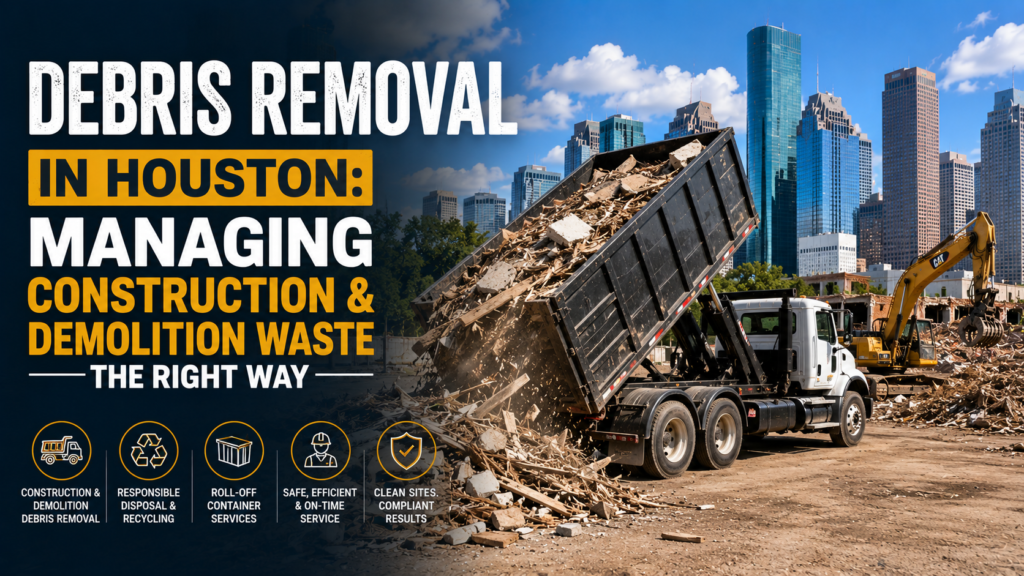
Construction and demolition activity in Houston generates enormous quantities of material. From the concrete and masonry of demolished commercial buildings to the wood framing, drywall, and insulation from home renovations, construction and demolition waste is one of the largest categories of solid waste produced in any growing metropolitan area. Houston with its continuously active construction market driven by population growth, storm damage repairs, and ongoing commercial development produces significant volumes of this material regularly.
Debris Removal Houston is the service that manages this material: collecting it, transporting it, sorting it where possible, and directing it toward appropriate disposal, recycling, or donation streams. It is an essential part of any construction, demolition, or renovation project, and understanding what it involves helps property owners, contractors, and developers manage their projects more effectively.
What Is Debris Removal?
Debris removal refers to the collection, hauling, and disposal of material generated by construction, demolition, renovation, or natural events such as storms. In a construction context, debris includes everything that is produced as a byproduct of building work: scrap lumber, excess concrete, broken masonry, discarded drywall, old flooring, removed roofing materials, metal scraps, cardboard packaging from materials, and dust.
In a demolition context, debris is the material that remains after a structure comes down: crushed concrete, twisted metal, wood framing members, demolished interior systems, and all the components that made up a building before it was torn down.
Post-storm debris in Houston is a distinct category fallen trees, damaged fencing, broken roofing materials, and the remnants of structures damaged by wind and flooding. Following major weather events, debris removal becomes one of the most urgent services in the city.
Types of Construction and Demolition Debris
Concrete and masonry broken slabs, block walls, brick, mortar, and tile make up a significant portion of demolition debris by weight. Concrete is one of the most recyclable construction materials: when crushed, it can be processed into recycled aggregate and used as base material for roads, parking lots, and drainage applications.
Wood and lumber from construction framing, formwork, and demolished structures is another major debris category. Clean wood can sometimes be diverted to wood chippers for mulch production or salvaged for reuse in other projects.
Drywall and gypsum board from renovations and demolition can be recycled in some markets; gypsum is a raw material for new drywall production. However, drywall that has been contaminated with mold or other substances requires special handling.
Metal structural steel, rebar, copper pipe, aluminum framing, and miscellaneous hardware is highly recyclable and typically carries market value at scrap metal facilities. Separating metal from other debris during collection increases its recycling potential.
Roofing materials, including asphalt shingles and underlayment, are heavy and generated in large quantities during reroofing projects in Houston’s active residential repair market. Asphalt shingles can sometimes be recycled into road paving material.
Hazardous materials asbestos-containing materials, lead paint, mold-contaminated material, and certain chemicals require specialized handling, transport, and disposal that is governed by EPA and Texas regulations. Standard debris removal services cannot accept these materials; certified hazardous waste contractors must handle them separately.
The Importance of Regular Debris Removal During Construction
One of the most commonly overlooked aspects of project management is the ongoing need for debris removal throughout the construction process, not just at the end. As a construction project progresses, debris accumulates daily. Scrap material piles up, packaging from delivered supplies collects, and cut-offs from framing and other trades build up around the work area.
Allowing debris to accumulate unchecked creates several problems. Safety risks multiply as cluttered worksites create tripping hazards, obstruct emergency egress routes, and complicate equipment movement. Project efficiency suffers when workers must navigate around debris to perform their tasks. And Houston’s heat and humidity mean that accumulated organic debris begins to decompose quickly, creating odors and potentially attracting pests.
Regular debris removal scheduled throughout the construction or renovation process, not just at completion keeps the worksite clean, safe, and efficient. Many professional debris removal services in Houston offer flexible scheduling to work around active construction timelines, including early morning or evening service that does not interfere with the primary work crew’s day.
Post-Construction Cleanup
The final phase of debris removal comes after construction or demolition is complete and before a space is occupied or turned over to its next users. Post-construction cleanup is more detailed than ongoing site debris management it involves not just removing remaining bulk waste but also cleaning construction dust from surfaces, removing adhesive residue and paint overspray, and leaving the space in a presentable condition.
Construction dust deserves particular attention. The fine particulates generated by cutting concrete, drywall, and masonry can settle on every surface in and around a construction area and, if not properly removed, pose respiratory health risks to occupants. Professional post-construction cleanup uses industrial-grade equipment and techniques to address dust removal comprehensively.
Responsible Disposal in Houston
Houston operates six Neighborhood Depository and Recycling Centers where residents can bring building materials, concrete, lumber, and appliances at no charge up to four visits per month with proper identification and proof of Houston residency. These facilities serve homeowners managing smaller renovation projects.
For commercial contractors and larger-volume debris generators, Houston’s commercial landfill network including Type I and Type IV facilities accommodates construction and demolition waste for a fee. Commercial-grade debris removal services handle the logistics of transport and disposal, working with licensed facilities to ensure compliance with Houston solid waste regulations.
Recycling is an increasingly important component of responsible debris removal. Beyond the environmental benefits of diverting material from landfills, recycled materials from construction and demolition waste feed back into the supply chain crushed concrete becomes road base, steel gets remelted into new product, and salvaged architectural elements find new life in other structures.
Storm Debris Removal in Houston
Houston’s position on the Gulf Coast makes it vulnerable to tropical storms and hurricanes, and the city has experienced multiple major weather events that have generated enormous debris loads across the metropolitan area. After significant storm events, debris removal shifts from a routine construction service to a citywide emergency management priority.
The City of Houston coordinates storm debris collection through its solid waste management infrastructure, establishing collection points and schedules that allow residents and businesses to dispose of storm-generated debris through organized channels. The Texas Division of Emergency Management and FEMA may become involved in major disaster declarations, enabling expanded debris removal resources and reimbursement programs for eligible debris collection.
Professional debris removal contractors in Houston play a critical role in storm recovery, working alongside municipal collection efforts to help businesses, property owners, and contractors clear sites quickly so that repair and rebuilding can begin.
Environmental Stewardship in Debris Removal
The environmental footprint of construction and demolition activity including its debris generation is an area of increasing focus in the construction industry and in communities like Houston that experience it at large scale. Professional debris removal services that prioritize recycling, donate usable materials to organizations like Habitat for Humanity ReStore, and minimize landfill contributions align with both environmental responsibility and Houston’s long-term waste management goals.
For property owners and contractors selecting a debris removal service, understanding how a provider handles material not just that they will haul it away is a worthwhile question to ask. The most responsible approach to debris removal in Houston is one that treats waste not as something simply to be eliminated, but as a resource stream that can be managed in ways that benefit both the project and the broader community.